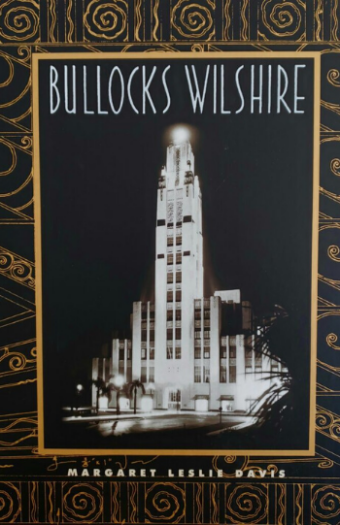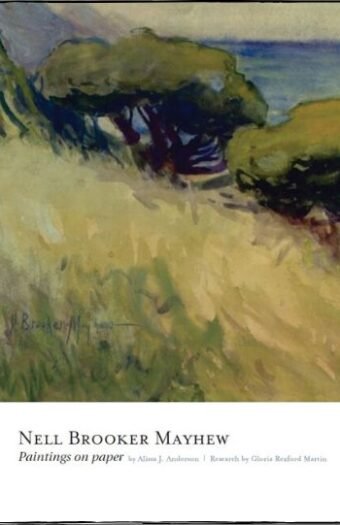
ORDER ONLINE OR CALL BALCONY PRESS DIRECT @ 626.460.8339

george-nikolajevich

George Nikolajevich

$24.95

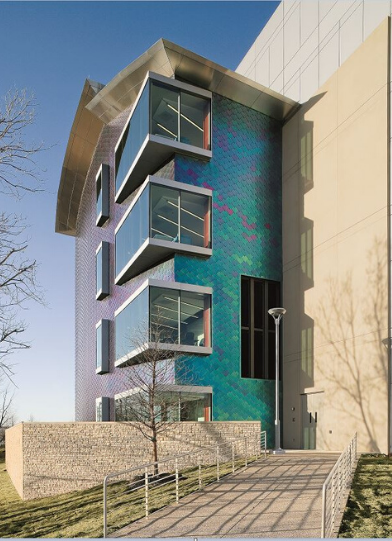
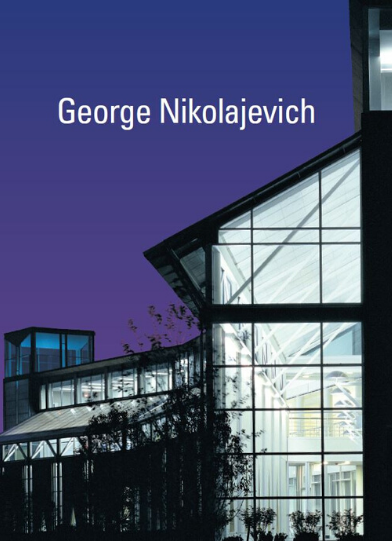
The architecture of George Nikolajevich exhibits a remarkable balance between restraint and expression. Working in St. Louis—far from the country’s coasts of architectural fashion he has created a body of work that delivers modernist élan and formal invention.

Categories: ,

Cliff A. Pearson

Clifford Pearson was an editor at Architectural Record for over 25 years. Now with the University of Southern California, he currently serves as a contributing editor at the magazine.

Description

The architecture of George Nikolajevich exhibits a remarkable balance between restraint and expression. Working in St. Louis, far from the country’s coasts of architectural fashion, he has created a body of work that delivers modernist èlan and formal invention.

The nature of Nikolajevich’s work flows from his position as a design principal of Cannon Design. Nikolajevich has been encouraged to carve out a special niche, turning his strength into a firm strength. In the process, he has designed an impressive number of buildings that combine a sense of Midwestern thrift and practicality with a flair for sophisticated design. His architecture has developed a growing affinity to that of the great architects Erik Gunnar Asplund and Alvar Aalto. Like Asplund’s work, Nikolajevich’s buildings have a quiet sculptural quality that impresses us with their economy of means. Sometimes less is, indeed, more. And like Aalto, Nikolajevich has demonstrated a humanist’s touch with simple materials.

Nikolajevich’s architecture demands your attention without hitting you over the head with architectural devices. At the same time, his buildings are easy to like; their warm brickwork, comfortable scale, and seductive formal gestures welcome everyone inside. While some modernist buildings are proud and aloof, Nikolajevich’s works are proud and inviting.

future-tense-zgf

Future Tense: Zimmer Gunsul Frasca

$65.00

Featuring a collection of work designed by the firm over the past dozen years, Future Tense explores a variety of building types, from hospitals to commercial office buildings, from university laboratories to residential condominium towers, embassies, and airports. Sustainable design and environmental stewardship are evident throughout the projects profiled, as is ZGF’s design process, with its emphasis on reflecting client culture, community building, and integrated design.

Categories: ,

Zimmer Gunsul Frasca

ZGF Architects is a design firm with an intentionally diverse portfolio including healthcare and research facilities, academic buildings, mixed-use developments, corporate campuses, museums, transportation facilities and ecodistricts. A practice with more than 600 professionals and offices in Portland, Seattle, Los Angeles, Washington DC, New York City, and Vancouver BC, we have an ethos of collaboration, design excellence, stewardship of our natural and built environment, and exceptional client service.

Description

Featuring a collection of work designed by the firm over the past dozen years, Future Tense explores a variety of building types, from hospitals to commercial office buildings, from university laboratories to residential condominium towers, embassies, and airports. Sustainable design and environmental stewardship are evident throughout the projects profiled, as is ZGF’s design process, with its emphasis on reflecting client culture, community building, and integrated design.

In his foreword to the monograph Joseph Giovannini notes, “Zimmer Gunsul Frasca has a long history of designing iconic structures, but beyond producing a defining visual image, the architects design buildings that will shape the culture of their clients. … Architecture for the firm is not a pre-established assumption, and certainly not an “ism,” but a process: The architects start a discussion that will yield a building that neither they nor clients could have predicted before shaking hands. The architects eschew the notion of signature and brand in favor of sensitivity and receptivity. Design for them has become an interactive process. … ZGF buildings are crisp and taut, layered and formally complex, and consistently handsome. But look belie their architectural IQ, which is embedded, out of sight, in the floor plan, materials, systems, internal urbanism, and patterns of socialization.”

Awarded the Architecture Firm Award, the American Institute of Architect’s highest honor, and the recipient of more than 400 national, regional, and local design awards, ZGF today maintains offices in New York; Los Angeles; Washington, DC; Seattle; and Portland, Oregon.

frozen-music

Frozen Music

$125.00
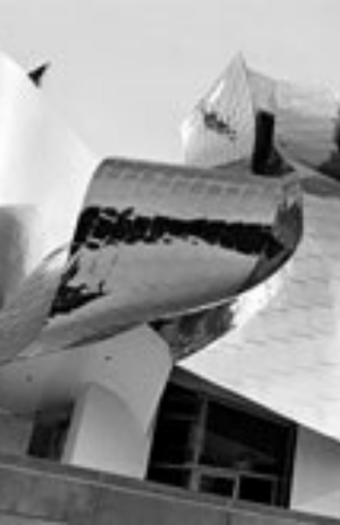
In this limited collector edition of only 1500 copies, Gil Garcetti’s brilliant interpretive photographs of the steel skin of the Walt Disney Concert Hall evoke the mystery, fluidity, texture and form of Frank O. Gehry’s lyrical shapes.

Gil Garcetti

Gil’s lifelong love for photography began with his first camera, a gift on his thirteenth birthday from his father, who was a barber in South Los Angeles. Through his photographs, Gil discovered he could share his unique vision of the world, finding beauty in the overlooked, as well as the grand. In addition to his photography, Gil became chairman of the California Science Center Foundation in 2019. He is a producer of the hit CBS series, ALL RISE, having been a producer of the TV series THE CLOSER and MAJOR CRIMES. Gil is a frequent speaker on subjects he photographs and on social change; he is a leader in the effort to eliminate the death penalty in California. He was a teaching Fellow at the Harvard University Kennedy School and President of the LA City Ethics Commission.

Description

WALT DISNEY CONCERT HALL | THE PHOTOGRAPHS OF GIL GARCETTI

In this limited collector edition of 1,500 copies, Gil Garcetti’s brilliant interpretive photographs of the steel skin of the Walt Disney Concert Hall evoke the mystery, fluidity, texture and form of Frank O. Gehry’s lyrical shapes. Garcetti observes, “The way the light hits the building makes it feel as if it is exploding. I found that the way the light looked could change literally in seconds.”

A natural sequel to his book of construction photographs, “Frozen Music” takes the genre into the realm of high-concept art photography. The work has garnered positive reviews from Pulitzer Prize winning photographer David Kennerly and architectural photographer Julius Shulman.

Meticulously reproduced in black and white duo-tones debossed on luxurious paper, the photographs in the book are removable for framing.

The photographs in this book were the subject of an exhibit at the National Building Museum, Washington D.C. in 2004.

everyday-heroes

Everyday Heroes

In Everyday Heroes artist Anne Greenwald pays tribute to the exceptional people our children encounter every day. They are the fabric of our neighborhood—teachers, school bus drivers, athletes, public servants, family members, and friends—and each can be a source of inspiration. Children will delight in the author’s colorful watercolor paintings depicting children at play with their heroes, just as parents will appreciate the inspiring reminder of how, in our own unique way, each of us is a hero.

Categories: ,

Anne Greenwald

Anne Greenwald was educated as an architect and artist and has worked as studio assistant to theatrical designer Tony Duquette and as interior design associate for internationally famous architect Frank O. Gehry. She managed Gehry’s traveling retrospective with the curatorial staff of Walker Art Center and other major museums. Ms. Greenwald was on the faculties of UCLA Extension and Otis College of Art and Design. Her paintings and drawings were widely exhibited over the course of her career. first book. Anne passed away in Los Angeles in 2005.

Description

In Everyday Heroes artist Anne Greenwald pays tribute to the exceptional people our children encounter every day. They are the fabric of our neighborhood—teachers, school bus drivers, athletes, public servants, family members, and friends—and each can be a source of inspiration. Children will delight in the author’s colorful watercolor paintings depicting children at play with their heroes, just as parents will appreciate the inspiring reminder of how, in our own unique way, each of us is a hero.

descanso-an-urban-oasis-revealed-grouped

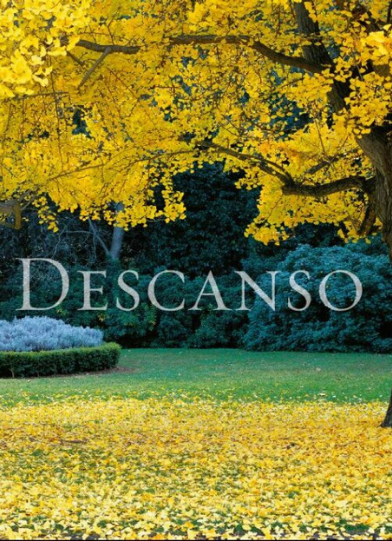
Descanso: An Urban Oasis Revealed

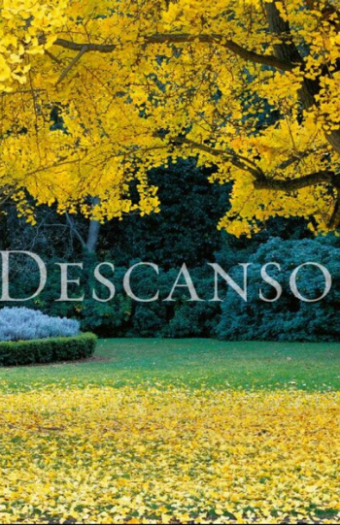
Rancho del Descanso — The Ranch of Rest — Descanso Gardens is one of Southern California’s oldest botanical gardens. Previously a Spanish rancho and later the estate of publisher and horticulturist E. Manchester Boddy the 150 acres was granted to the people of Los Angeles County including one of the world’s finest collections of camellias and oaks. Marr’s garden images call to mind the long tradition of photographers who have responded creatively to the garden and its timeless appeal.

Warren Marr

Warren Marr has a worldwide reputation as a master interpreter of eloquently expressive images. Published in numerous books and periodicals, his images have also been seen in advertisements, brochures, and billboards for companies that include General Motors, National Geographic, and Delta Airlines. He has photographed more than 65 golf courses, most of them in Southeast Asia, and in 2006 he was the subject of an LA Times feature article and a KCET television feature. His esthetic and technical mastery of panoramas allow an exploration of the edges of reality, presenting images unique to his own point of view.

Description

Rancho del Descanso — The Ranch of Rest — Descanso Gardens is one of Southern California’s oldest botanical gardens. Previously a Spanish rancho and later the estate of publisher and horticulturist E. Manchester Boddy the 150 acres was granted to the people of Los Angeles County including one of the world’s finest collections of camellias and oaks. Marr’s garden images call to mind the long tradition of photographers who have responded creatively to the garden and its timeless appeal. Descanso Gardens is what Marr refers to as a “natural light box” and the result of his photographic explorations is what Getty curator Anne Lyden calls “lyrical and luminous.”

The lush panoramic images combined with essays on the significance of the garden’s plants and history make an elegant volume for photography and garden lovers alike.

dance-in-cuba

Dance in Cuba

$65.00

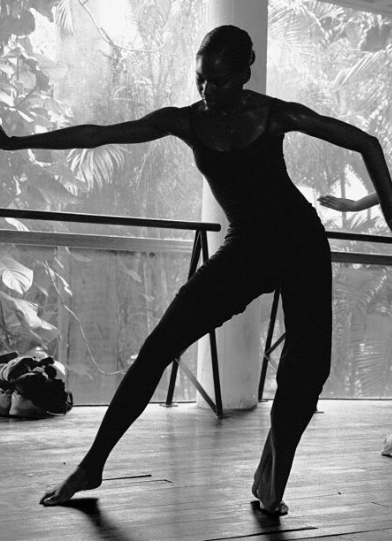
Garcetti’s new book of photographs, Dance in Cuba, is a visual chronicle of Cuba’s little-known, yet extremely vibrant, dance culture. Working with Alicia Alonso, Director of the Ballet Nacional de Cuba, Garcetti enjoyed unprecedented access to classical ballet and contemporary dance studios in addition to street and folk dance troupes.

Gil Garcetti

Gil’s lifelong love for photography began with his first camera, a gift on his thirteenth birthday from his father, who was a barber in South Los Angeles. Through his photographs, Gil discovered he could share his unique vision of the world, finding beauty in the overlooked, as well as the grand. In addition to his photography, Gil became chairman of the California Science Center Foundation in 2019. He is a producer of the hit CBS series, ALL RISE, having been a producer of the TV series THE CLOSER and MAJOR CRIMES. Gil is a frequent speaker on subjects he photographs and on social change; he is a leader in the effort to eliminate the death penalty in California. He was a teaching Fellow at the Harvard University Kennedy School and President of the LA City Ethics Commission.

Description

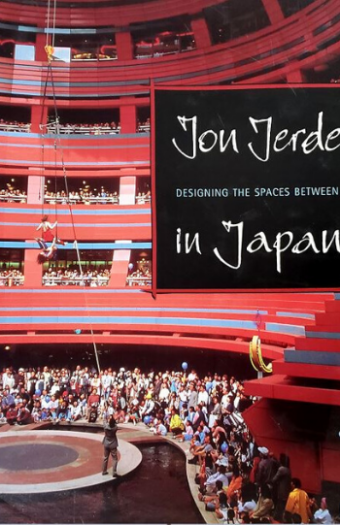
Now achieving national critical acclaim from numerous institutions for his work in Iron: Erecting the Walt Disney Concert Hall and Frozen Music, Gil Garcetti embarks on a voyage to Cuba. In a country most known for political tensions, the American public is not as familiar with Cuba’s performing arts. In addition to music, dance is an essential part of daily life. In natural conditions, without the use of studio lighting and posing, Garcetti reveals that dance is more than a discipline. For Cubans it is a passion. Folkdance, classical ballet, contemporary dance, lamenco and street performances are a way of life, and no one is excluded. Working with Miguel Iglesias Ferrer, Director of the Danza Contemporánea de Cuba, Alicia Alonso, Director of the Ballet Nacional de Cuba, and other dance company directors, choreographers, and dancers, Garcetti had unprecedented access to dance company classes and rehearsals, as well as stage performances. But Cuban spirit is not limited to the professional stage. It can also be seen every day with dancers in the streets, in clubs, and in schools. Garcetti has used his camera to capture the energy and spirit of the Cuban people through their love of dance.

cruising-la

Cruising LA: Architectural Styles in 5 Easy Drives

$14.95

Inevitably, all visitors to Los Angeles discover that the automobile defines the L.A. experience. Unlike in New York or London, for instance, where complex networks of subways and buses provide access to nearly all points of interest throughout the city, in Los Angeles one must rely on one’s own navigation and driving skills to get from point to point. Thus, more often than not, visitors to Los Angeles spend much of their time in the city’s often-frustrating vast freeway system, away from the ground and the most endearing aspects of the place. Cruising L.A., the first driver’s companion guidebook to Los Angeles, replaces the frustration that is unique to touring L.A. with an expertly guided five-day driving route that exposes one to the most scenic neighborhoods Los Angeles has to offer, revealing the culture, architecture, and stunning landscape features that comprise the draw that brings so many visitors to L.A. to begin with.

Description

Introduction by William H. Fain, Jr., FAIA

Inevitably, all visitors to Los Angeles discover that the automobile defines the L.A. experience. Unlike in New York or London, for instance, where complex networks of subways and buses provide access to nearly all points of interest throughout the city, in Los Angeles one must rely on one’s own navigation and driving skills to get from point to point. Thus, more often than not, visitors to Los Angeles spend much of their time in the city’s often-frustrating vast freeway system, away from the ground and the most endearing aspects of the place. Cruising LA, a driver’s companion guidebook to Los Angeles, replaces the frustration that is unique to touring L.A. with an expertly guided five-day driving route that exposes one to the most scenic neighborhoods Los Angeles has to offer, revealing the culture, architecture, and stunning landscape features that comprise the draw that brings so many visitors to L.A. to begin with.

Balcony Press’ unique guide to architectural styles by neighborhood provides total immersion in your favorite period. Go back in time to West Adams Victorian, Pasadena Craftsman and Hollywood Deco or experience the L.A. of today with Venice Vernacular and Silver Lake Modern enhanced with restaurant choices that add to the flavor of the drive.

“Nowhere in the United States but Los Angeles does a city have a collection of neighborhoods with such distinctly differing architectural styles: Boston is Federalist brick; Miami Beach, Art Deco; San Francisco, stick Victorian. Other styles in these cities are unheard of. Each of the five neighborhoods included in Cruising LA reflects a distinct notion about the ‘good life’.” -William H. Fain Jr., FAIA Partner, Johnson Fain

caltechs-architectural-heritage

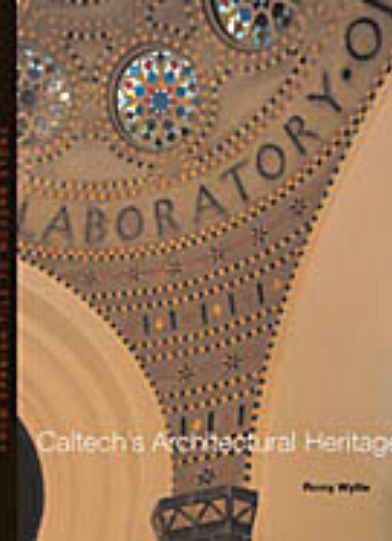
Caltech’s Architectural Heritage: From Spanish Tile to Modern Stone

$39.95

“Romy Wyllie’s history of Caltech’s architecture is instructive, tragic, and challenging. It shows us how American architects of the early twentieth century like Goodhue and Kaufmann were able to shape a clear, firm, harmonious environment, a wonderful place, and how their successors later in the century came close to destroying it. It is the genius of the place that counts, the noble garden.”
—Vincent Scully, Professor Emeritus History of Art, Yale University

Romy Wyllie

Romy Wyllie is an interior designer and co-founder of the architectural tour service at the California Institute of Technology for which she was named an Honorary Alumna. She previously taught architectural history and interior design at the Harrington Institute of Design in Chicago. For six years she was managing editor of the Journal of Geology at the University of Chicago. Her many published articles have appeared in the Los Angeles Times, Chicago Tribune, New York Times, and the New Republic.

Description

The campus of the California Institute of Technology was destined for architectural greatness when, in 1915, the university’s visionary founder, astronomer George Ellery Hale, retained one of New York’s preeminent architects, Bertram Goodhue, to devise a master plan for 22 acres of orange groves in what was then rural Pasadena. That elegant plan still resonates in the contemporary oasis of buildings each beautifully, and often whimsically decorated with sculpture, wrought iron, and ornate tile work.  Well-known architects Myron Hunt and Elmer Grey in 1910 had begun the original campus buildings in a Spanish Colonial style but it was Goodhue’s eclectic “planted patios and shaded portales, sheltering walls and Persian pools” that set the tone for the campus’ illustrious architectural future.
Throughout the first half of the century, Caltech’s nearly continuous expansion would spawn such architectural jewels as the Athenaeum, a combination Italian villa and Spanish hacienda; Greene and Greene’s bungalow-style student union; Dabney Hall, a southwest pueblo decorated in a Mayan theme; and the gardens of landscape architects Beatrix Ferrand and Florence Yoch who thoughtfully mixed the campus’ Mediterranean themes with its natural California setting.

Rare photographs of lost and altered buildings portray an early Pasadena with ambitious plans to become a cultural mecca. Contemporary images reflect the Institute’s continued dedication to a rich architectural future. Well researched and informative, this book details the organizational and architectural elements that have made Caltech a model for scientific institutions the world over and communicates the inspirational effect the campus’ architecture has had on its scientific achievements.

buff-and-hensman

Buff & Hensman

$59.95

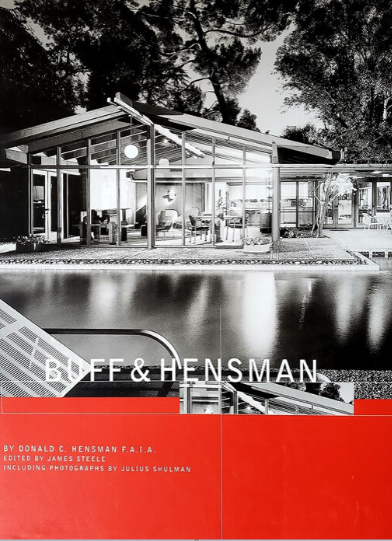
Conrad Buff and Donald Hensman produced an impressive body of elegant California modern architecture over their long partnership, including a contribution to Art & Architecture magazine’s Case Study House Program. This book is the first comprehensive look at their achievement with inside commentary on their most important projects, as well as a complete chronology of all of their work.

Out of stock

Don Hensman

In decades-long collaboration with architects Conrad Buff III and, later, Calvin C. Straub and others, Hensman created hundreds of contemporary homes ranging from budget-minded dwellings to opulent celebrity sanctuaries. Among them were two of the legendary Case Study Program houses, No. 20 and No. 28. Conceived by John Entenza, editor and publisher of the avant-garde monthly magazine Arts & Architecture, the Case Study project was intended to foster the creation of modern, easily constructed and affordable housing prototypes.

Description

Conrad Buff and Donald Hensman produced an impressive body of elegant California modern architecture over their long partnership, including a contribution to Art & Architecture magazine’s Case Study House Program, as well as houses for many celebrities and the Governor’s Mansion for Ronald Reagan. Buff and Hensman’s houses epitomized an increasingly casual lifestyle that began to revolutionize social habits across the United States. An almost perfect climate in and around Los Angeles made it possible for the architects to evolve a light wood frame and glass panel architecture that blends seamlessly with its surroundings. After a building code change later in their career made it necessary to change their design medium, they did it effortlessly, opening up a new phase in their creative life.

This book is the first comprehensive look at their achievement with inside commentary on their most important projects, as well as a complete chronology of all of their work.

Edited by James Steele
Introduction by Alex Moseley
Preface by Robert H. Timme
Photography by Julius Shulman

ola-amigos

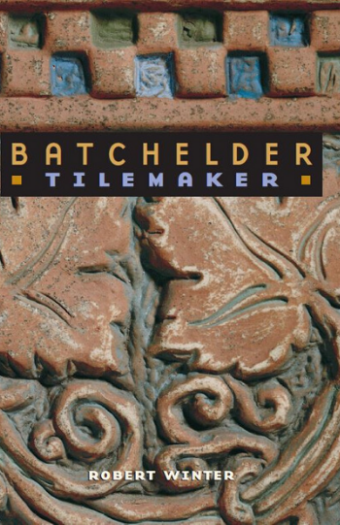
Batchelder Tilemaker

$29.95

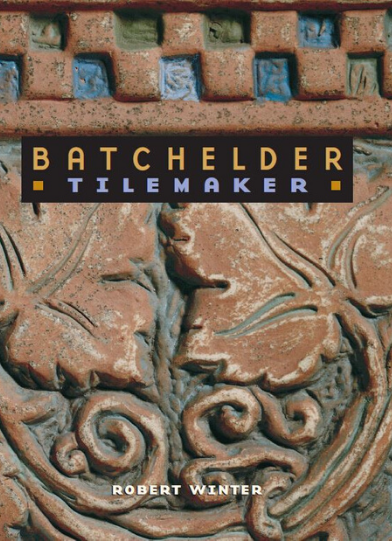
Ernest Batchelder’s ceramic tile-making enterprise began as a modest backyard venture in rural Pasadena, California but quickly grew to a place of prominence far beyond. New York, Minneapolis and Vancouver would soon become host to major Batchelder architectural ceramic installations. His clients ranged from restaurants to churches to highrise office buildings but perhaps the most striking installations remain the many fireplaces gracing modest American bungalows throughout the country.

Out of stock

Robert Winter

Award-winning historian and author Robert W. Winter is the Arthur G. Coons Professor of the History of Ideas Emeritus at Occidental College where he chaired its History and History of Civilization programs. His many books include Hidden LA (Gibbs Smith), Toward a Simpler Way of Life: Arts and Crafts Architects of California (University of California Press), American Bungalow Style (Simon & Schuster), and the multiple editions of the seminal Guides to Architecture in Los Angeles and San Francisco (Peregrine Smith). The governor has appointed him to the California State Historic Resources Commission. A scholar of the Arts and Crafts movement, Dr. Winter has lived in Ernest Batchelder’s bungalow in Pasadena, California for 27 years.

Description

Ernest Batchelder’s ceramic tile-making enterprise began as a modest backyard venture in rural Pasadena, California but quickly grew to a place of prominence far beyond. New York, Minneapolis and Vancouver would soon become host to major Batchelder architectural ceramic installations. His clients ranged from restaurants to churches to highrise office buildings but perhaps the most striking installations remain the many fireplaces gracing modest American bungalows throughout the country.

In 1908 this enterprising young man left a prestigious teaching position to start his own school and factory with the goal of establishing a West Coast guild of craftsmen joined by the Arts and Crafts ideal of dignity in hand labor. Although an artistic idealist, Batchelder did not neglect the financial affairs of his business. By1930, the Batchelder-Wilson Company had showrooms in Los Angeles, New York, Chicago, and San Francisco as well as representation in virtually every major city in the United States. Batchelder remained the preeminent leader of handmade tiles in the West until the Depression forced the closure of his operations in 1932.

Those among us who appreciate fine craftsmanship can imagine the glow of a crackling fire on mellow earthenware tiles while we reflect upon the principles that guided this man’s remarkable life.

812 Fremont, Suite 205, South Pasadena, CA 91030 626.460.8339 contact@balconypress.com
Orders can be placed online or by calling Balcony Press directly.